

For startups, the journey to success begins with knowing your customer inside and out. The most successful businesses are those that deeply understand their target market and align their product, messaging, and strategy around these insights. Building this level of understanding involves going beyond surface demographics to uncover the motivations, preferences, and behaviors that shape customer decisions. Here’s how you, as a startup founder, can build meaningful connections with your ideal customers and create a lasting impact in the market.
1. Why Knowing Your Customer is Critical to Startup Success
In today’s competitive landscape, having a strong product alone is rarely enough. The real key to success is ensuring that your product genuinely meets the needs of your target audience. By deeply understanding your customers, you can not only deliver a better product but also optimize your marketing strategy, reduce acquisition costs, and build loyalty. Startups that prioritize customer insight are often better positioned to achieve product-market fit and stand out from the competition.
Key Benefits of Knowing Your Customer:
- More efficient marketing efforts and reduced customer acquisition costs
- Stronger product-market alignment and increased customer satisfaction
- Improved customer loyalty and lifetime value
2. Developing a Comprehensive Customer Profile
Creating a customer profile means defining the “who” behind your target market. A robust customer profile includes various traits and characteristics—demographics, psychographics, and behaviors—that paint a clear picture of your ideal customer

Steps to Build Your Customer Profile:
- Demographic Information: Start with basic information like age, gender, income, and location. These attributes help you understand who is likely to buy from you and where to direct your marketing efforts.
- Psychographic Insights: Go deeper to explore values, motivations, and lifestyle. What are your customers’ interests, hobbies, and life goals? This information can help you shape a message that resonates with their values.
- Behavioral Data: Analyze how your customers interact with your brand or similar products. Are they frequent buyers, one-time users, or price-sensitive shoppers? Understanding these behaviors helps you optimize your sales and marketing strategies to meet their needs.
Once you have a clear customer profile, you can create customer personas—fictional representations of your ideal customer segments. Personas help your team make product and marketing decisions that are centered on real customer needs, not assumptions.
3. Segmenting Your Audience for Targeted Engagement
Customer segmentation is the process of dividing your audience into groups that share similar traits or needs. By segmenting your audience, you can tailor your messaging, marketing strategies, and even product features to resonate with specific customer groups. This targeted approach is more effective than trying to appeal to everyone, allowing you to focus on the segments with the highest potential.
Types of Segmentation:
- Demographic Segmentation: Groups customers by attributes like age, gender, or income. For example, if you’re marketing a high-end fitness tracker, you might focus on professionals with higher disposable incomes.
- Geographic Segmentation: Targets people based on their location. This is particularly useful for location-based services or products relevant to specific regions.
- Psychographic Segmentation: Focuses on values, lifestyles, and personality traits. This type of segmentation helps create a deeper connection with customers by aligning with their personal beliefs or life goals.
- Behavioral Segmentation: Groups customers based on their buying habits and brand interactions. For example, loyal customers may respond well to loyalty programs or exclusive offers.
The goal of segmentation is to know where to focus your resources. With the right segmentation strategy, your startup can engage customers with the messages and experiences they’re most likely to respond to.
4. Crafting a Customer-Centric Product Strategy
A strong customer profile and segmentation strategy allow you to design your product with the customer in mind. When you know what your ideal customer values, it’s easier to make decisions about product features, design, and usability that align with their needs.
Tips for Building a Customer-Centric Product Strategy:
- Incorporate Feedback: Gather insights from surveys, interviews, and social media engagement. Use this feedback to refine your product, add new features, or adjust pricing.
- Identify Key Touchpoints: Focus on the moments that matter most in the customer journey. This could be the initial sign-up experience, the first product use, or customer support interactions. By optimizing these touchpoints, you enhance the overall customer experience.
- Solve Real Problems: Don’t just build features for the sake of innovation. Focus on addressing the most pressing pain points of your ideal customers. A well-designed, customer-centered product is more likely to attract loyal users and generate positive word-of-mouth.
A customer-centric product strategy helps your business stand out and ensures that you’re delivering value where it matters most.
5. Customer Acquisition and Retention Tips for Startups
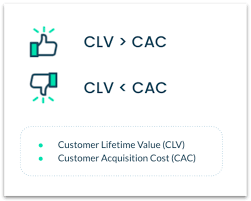
Acquiring new customers is only one part of the equation; retaining them is equally important. Building loyalty with your customers reduces churn and increases customer lifetime value (CLV), contributing to more sustainable growth. Startups that understand and retain their customers effectively also achieve a more efficient balance between Customer Acquisition Cost (CAC) and CLV.
Credit: Nozzle AI
Some Customer Acquisition Tips:
- Content Marketing: Create valuable, educational content that speaks directly to the needs and challenges of your audience. This can include blog posts, videos, and social media content.
- Social Proof: Showcase testimonials, case studies, and customer reviews to build trust with potential buyers. Highlighting your positive impact on real customers makes your startup more relatable and credible.
- Targeted Ads: Use your customer profile data to run highly targeted ad campaigns on platforms like Google, Facebook, and LinkedIn. Tailored ads increase the likelihood of reaching the right audience with relevant messaging.
Some Customer Retention Tips:
- Regular Communication: Keep your customers engaged with email newsletters, updates on new features, and special offers. Regular communication helps keep your brand top-of-mind.
- Loyalty Programs: Implement a rewards program to incentivize repeat purchases or customer referrals. Even small perks, such as discounts or early access to new products, can encourage customer loyalty.
- Personalized Experiences: Use customer data to personalize interactions, whether through customized recommendations or tailored offers. Personalization shows customers that you value their preferences.
Balancing CAC and CLV is crucial for a sustainable business model. If your acquisition costs are high, focus on increasing CLV through retention strategies, which are often less costly than acquiring new customers.
6. Case Study Example: Customer Insight in Action
FoodDate is a startup that offers a meal delivery service targeted at busy young professionals who prioritize healthy eating. Through research and segmentation, they create personas for two customer types: “Time-Strapped Professionals” and “Health-Conscious Planners.” By understanding that their “Time-Strapped” segment values convenience and their “Planners” focus on nutritional content, the startup tailors its messaging accordingly.
For “Time-Strapped Professionals,” the company highlights quick, on-the-go meal options, while for “Health-Conscious Planners,” it emphasizes the nutritional quality and meal customization features. This segmented approach allows the startup to connect more personally with each customer type, resulting in higher engagement and lower churn.
7. Conclusion: Building Long-Term Connections with Your Ideal Customer
Understanding and connecting with your ideal customer is not a one-time task—it’s an ongoing process that evolves as your startup grows. Regularly revisiting and refining your customer profiles, segmentation strategy, and product features keeps you aligned with the needs and preferences of your target audience.
By investing in customer insights, you’re not just building a better product—you’re creating a brand that resonates with the people it serves. This commitment to understanding your customers lays the foundation for a loyal customer base and sustainable growth, helping you turn your startup into a trusted and valuable part of your customers’ lives.