

Every startup chases traffic but very few convert it.
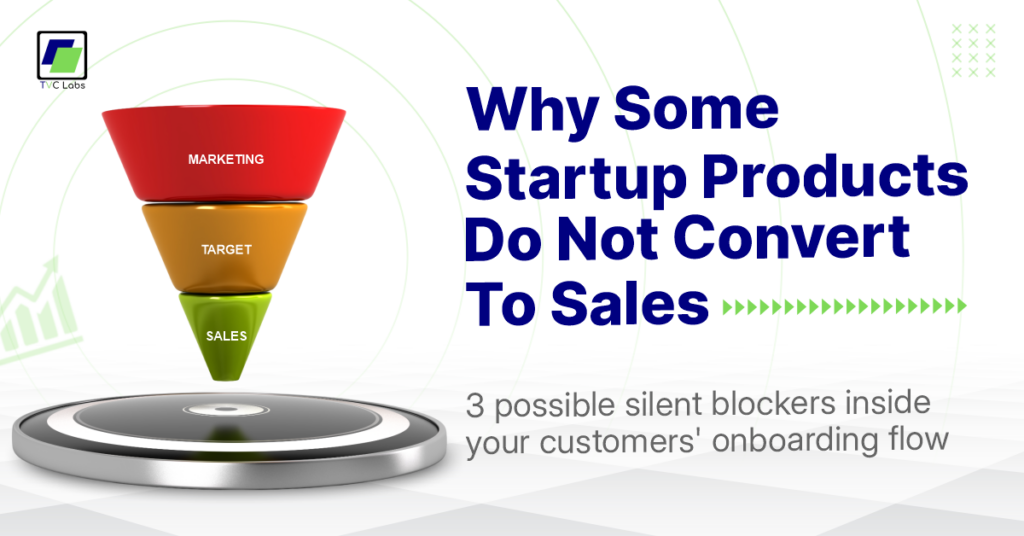
Founders pour energy into awareness: social media, launch campaigns, ads, PR. But when users arrive, something breaks. Signups stall. Trials don’t activate. Demo calls don’t close.
This isn’t a demand problem.
It’s a conversion failure.
In this article, we break down why most early-stage startups underperform on conversion and what the most effective founders do to fix it.
1. Confusing Interest with Intent
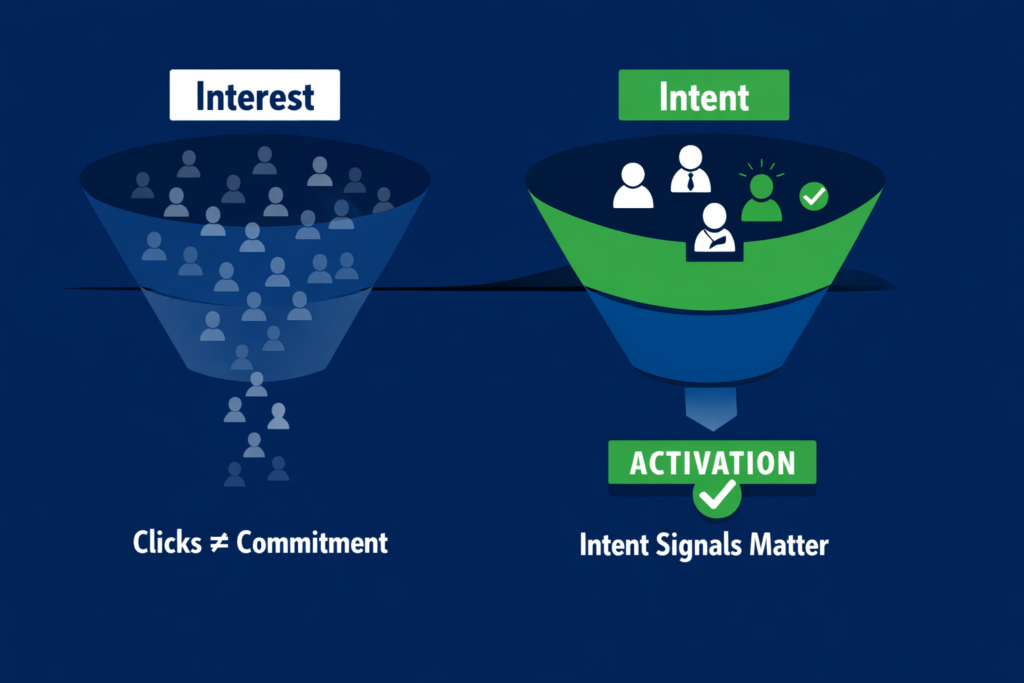
Just because someone visits your site doesn’t mean they’re ready to buy.
Traffic ≠ Conversion
Views ≠ Demand
Signups ≠ Users
Early-stage founders often treat every visitor like a buyer. This leads to vague positioning, weak CTAs and landing pages that try to serve everyone but convert no one.
Fix:
Design your funnel for one clear next step. Don’t optimize for admiration. Optimize for action.
2. Your Onboarding Leaks Trust
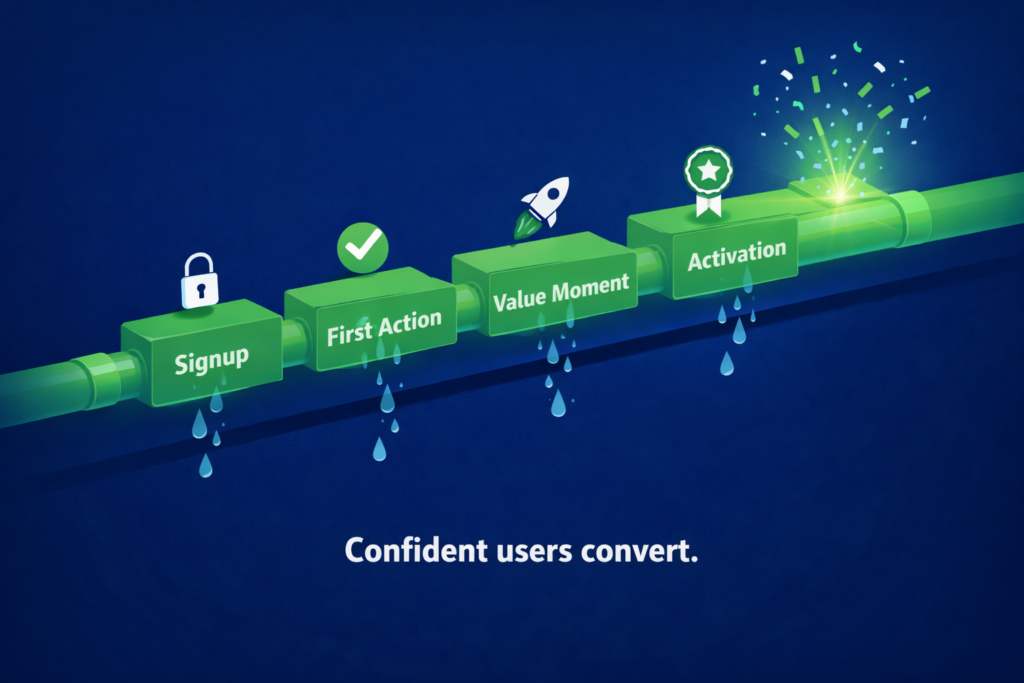
In the early days, users don’t trust you. They are skeptical. They’ve been burned.
Yet most startups push users into a clunky signup, ask for sensitive info, or promise vague benefits like “seamless productivity” with no proof.
Fix:
- Remove unnecessary friction: Ask only what you need.
- Show immediate value: Let users see benefit before commitment.
- Use trust triggers: Founder credibility, testimonials, transparent pricing and clear privacy language.
3. Activation Is an Afterthought
Conversion does not end at signup.
If users don’t experience value quickly, they won’t come back.
You are not just converting visitors, you are converting behavior.
- They focus only on top-of-funnel – Ads, impressions, followers.
- They overcomplicate onboarding – Too many steps, too little clarity.
- They ignore user behavior – What users actually do after sign-up is what matters most.
- They chase new features – Instead of perfecting the first experience.
Fix:
- Identify your activation moment – the action that strongly correlates with retention (e.g., first message sent, dashboard completed, first project created).
- Optimize the journey to that moment.
- Automate nudges, walkthroughs, and help content to get them there.
4. Copycat Pricing Confuses Users
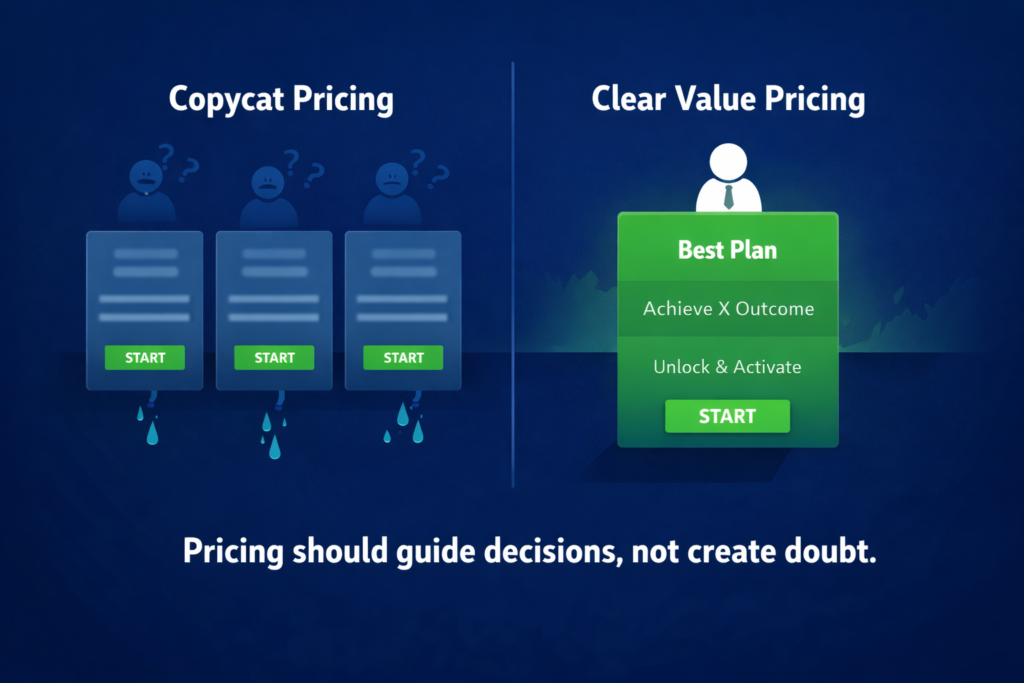
Many founders default to pricing models they have seen elsewhere even if those companies are in different markets, stages or trust environments.
Fix:
- Use pricing to reinforce clarity, not create doubt.
- Start with value-based or low-friction tiers, then scale into complexity.
- Test pricing structure (not just the number) as part of your conversion strategy.
5. You’re Not Measuring Conversion Properly
Early-stage startups often lack clear metrics for each funnel stage. Without this, it is impossible to know what’s working and where you are leaking value.
Fix:
Set up basic funnel tracking:
- Visitor → Signup Rate
- Signup → Activation Rate
- Activation → Retention or Referral Rate
Don’t aim for perfect data. Aim for actionable signals.
Conclusion: Fixing Conversion Is Fixing Growth
You don’t need more traffic.
You need more traction.
And traction starts when visitors become believers not just through better marketing, but by removing friction, building trust and aligning pricing and activation with user reality.
Founders who fix this early win faster.
Want to understand what investors actually look for before funding conversations start?
Join the Digital Data Room and see how strong founders structure traction, metrics, and narratives that pass investor scrutiny with access to pre-built tools designed to help your business grow faster.
Members get practical frameworks, ready-to-use templates, and operating tools you can apply immediately to sharpen execution, track progress, and prepare for funding conversations.
Learn what to prepare, what to fix and what to stop guessing.
Explore the Digital Data Room here: https://www.diaglocal.com/masterclass